Evidence & innovation portfolio

Evidence connected to people.

Explore public research, innovation, policy, and implementation records. Project stage, product status, relationship, contributors, institutions, and sources remain distinct and inspectable.

The public portfolio includes only records approved for disclosure; confidential or unverified work is withheld.

Canonical scientific records

One project. One current scientific pathway.

Study aim, preprint provenance, active journal stage, Network-derived author relationship, manuscript affiliations, controlled tags and verification date remain separate and inspectable.

A selection of our work. Some projects in progress or peer review are not disclosed under confidentiality agreements with their investigators.

How to read the numbers

Clinical outcomes

A percentage describes a proportion within the stated group. A risk ratio compares two risks: 1 means equal risks; 2 means twice the risk in the stated comparison, not twice the number of patients. Association alone does not establish causation.

Number needed to treat

The estimated number of people treated for one additional benefit over a specified period and comparator. It depends on baseline risk and uncertainty.

Read the BMJ methods article ↗

Health economics

A quality-adjusted life-year (QALY) combines length and quality of life. Net monetary benefit (NMB) values health gains at the study’s stated threshold, then subtracts costs. A cost-effectiveness probability summarizes model uncertainty; it is not the probability that a patient improves.

Read about cost-effectiveness uncertainty ↗

Comparisons and precision

Read the group order, units, study design and follow-up alongside each estimate. Counts remain whole numbers; monetary and percentage estimates use two decimal places where supported. See the source for confidence intervals and limitations.

microscopIA GovernedmicroscopIA CollaborationIndependent Network Record10 projects
microscopIA CollaborationCase reportPreprint availablePeer reviewVerified 2026-08-19

Pediatric trauma and reconstructive surgery

Staged orthoplastic reconstruction of an 8-cm open Achilles tendon defect after crush trauma in a 7-year-old child: a case report

Preprint available · Peer review at Journal of Medical Case Reports

Study aim

This case report describes the staged orthoplastic reconstruction of an 8-cm open Achilles tendon defect following crush trauma in a 7-year-old child, focusing on the reconstructive strategy used to restore tendon continuity and soft-tissue coverage after severe injury.

Study design
Clinical case report
Geography
Colombia
Preprint record
Research Square · 2026-07-17 · v1 · CC BY 4.0
Verification source
Research Square preprint and current Springer submission record

Pediatric traumaAchilles tendonOrthoplastic reconstructionPediatric orthopedicsReconstructive surgeryReverse sural flapSemitendinosus autograftCase report+1 more
Capabilities involvedResearch & EpidemiologyBiomedical Engineering & DevicesScientific Publication
Authors and manuscript affiliations

microscopIA scientists

Camilo Perdomo-LunaNetwork profileDepartment of Radiology and Imaging Science, Emory University, Atlanta, USA
Jorge RacedoNetwork profileGlobal Studies Institute, University of Geneva, Geneva, Switzerland

External collaborators

Esteban Salgar-SaiehClínica San José, Colombia
Santiago Otero-ParraPontificia Universidad Javeriana, Colombia
Carlos A. Salgar-VillamizarClínica San José, Colombia
Ángel Barreto CastillaClínica San José, Colombia
microscopIA GovernedOriginal research · Health economic evaluationPreprint availablePeer reviewVerified 2026-08-19

Retinopathy of prematurity and health economics

Economic evaluation of topical ketorolac and nepafenac prophylaxis for early-stage retinopathy of prematurity: a multicenter real-world study in Colombia

Preprint available · Peer review at Cost Effectiveness and Resource Allocation

Study aim

This study evaluates the cost-effectiveness of topical ketorolac and nepafenac prophylaxis for early-stage retinopathy of prematurity using multicenter real-world clinical and economic data from Colombia.

Study design
Multicenter real-world economic evaluation
Geography
Colombia · 14 centers
Initiative
Global Retinopathy of Prematurity Observatory
Preprint record
Research Square · 2026-07-12 · v1 · CC BY 4.0
Verification source
Research Square preprint and current Springer submission record
Retinopathy of prematurityHealth economicsCost-effectivenessReal-world evidenceKetorolacNepafenacNSAIDsProphylaxis+4 more
Selected study metrics
Net monetary benefitUSD 508.71

Incremental value expressed as net benefit at the study willingness-to-pay threshold.

Probability cost-effective68.02%

Share of probabilistic simulations favoring the prophylaxis strategy at the study threshold.

Capabilities involvedHealth EconomicsResearch & EpidemiologyData Science & Statistics
Authors and manuscript affiliations

microscopIA scientists

Giliana García-AcevedoNetwork profileDepartment of Pediatrics and Child Health, University of Manitoba, Winnipeg, Canada
Jorge Eduardo Silva MorenoNetwork profileDepartment of Research and Innovation, microscopIA, Bogotá, Colombia
Karol Valeria Guerrero BeltránNetwork profileDepartment of Research and Innovation, microscopIA, Bogotá, ColombiaSchool of Medicine, Universidad de Los Andes, Bogotá, Colombia
Wilman Sánchez-HernándezNetwork profileDepartment of Research and Innovation, microscopIA, Bogotá, ColombiaDepartment of Engineering and Artificial Intelligence, microscopIA, Bogotá, Colombia
Camilo Perdomo-LunaNetwork profileDepartment of Radiology and Imaging Science, Emory University, Atlanta, USASchool of Health Systems Engineering and Global Health, microscopIA, Bogotá, Colombia
Jorge RacedoNetwork profileDepartment of Research and Innovation, microscopIA, Bogotá, ColombiaGlobal Studies Institute, University of Geneva, Geneva, Switzerland

External collaborators

Bryan N. Forero VásquezDepartment of Research and Innovation, microscopIA, Bogotá, ColombiaDepartment of Internal Medicine, Fundación Universitaria San Martín, Bogotá, Colombia
microscopIA GovernedOriginal research · Real-world clinical evidencePreprint availableRevisionVerified 2026-09-20

Retinopathy of prematurity

Topical ketorolac and nepafenac prophylaxis in early retinopathy of prematurity: real-world clinical evidence from a multicenter care network in Colombia

Preprint available · Revision at BMC Pediatrics

Study aim

This study evaluates real-world clinical outcomes associated with topical ketorolac and nepafenac prophylaxis for early-stage retinopathy of prematurity across a multicenter care network in Colombia.

Study design
Multicenter real-world cohort
Geography
Colombia · multicenter care network
Initiative
Global Retinopathy of Prematurity Observatory
Preprint record
Research Square · 2026-08-19
Verification source
Research Square record; revision status confirmed by Jorge Racedo on 2026-09-20
Retinopathy of prematurityReal-world evidenceKetorolacNepafenacTopical NSAIDsProphylaxisClinical outcomesPediatric ophthalmology+3 more
Selected study metrics
Stage 3 or higher20.83% vs 45.65%

Observed progression in prophylaxis and comparison groups, respectively.

Number needed to treat4 infants

Estimated number treated to prevent one additional Stage 3-or-higher outcome.

Mean remission time7.33 vs 12.79 weeks

Observed mean time to remission in prophylaxis and comparison groups.

Capabilities involvedResearch & EpidemiologyData Science & StatisticsScientific Publication
Authors and manuscript affiliations

microscopIA scientists

Giliana García-AcevedoNetwork profileDepartment of Pediatrics and Child Health, University of Manitoba, Winnipeg, Canada

External collaborators

Julio C. Racero MendozaAffiliation pending primary-source verification
Laura C. Montoya BurgosAffiliation pending primary-source verification
Stephany Abud CogolloAffiliation pending primary-source verification
microscopIA GovernedOriginal research · National geospatial health-systems analysisPreprint availablePeer reviewVerified 2026-08-19

Transplantation and health-system access

Graft-specific travel-time accessibility and underserved zones in Colombia’s transplant system

Preprint available · Peer review at BMC Public Health

Study aim

This study evaluates graft-specific geographic accessibility to transplant-capable services across Colombia and identifies populations living beyond clinically relevant travel-time thresholds to support transplant-network planning and identify underserved areas.

Study design
National cross-sectional geospatial analysis
Geography
Colombia · national
Preprint record
Research Square · 2026-07-23 · v1 · CC BY 4.0
Verification source
Research Square preprint and current Springer submission record
TransplantationGeospatial analysisGeographic accessibilityTravel-time accessibilityHealth systemsHealth equityHealth system planningService accessibility+3 more
Capabilities involvedGeospatial & Access AnalysisPolicy & Decision IntelligenceResearch & Epidemiology
Authors and manuscript affiliations

microscopIA scientists

Juan José Ramírez MeloNetwork profilemicroscopIA, Bogotá, ColombiaUniversidad Tecnológica Nacional, Buenos Aires Regional Faculty, Argentina
David F. Estupiñán PepinosaNetwork profilemicroscopIA, Bogotá, ColombiaSchool of Medicine, Universidad de Los Andes, Bogotá, Colombia
Ariadna Haydar ChamsNetwork profilemicroscopIA, Bogotá, ColombiaSchool of Medicine, Universidad del Norte, Barranquilla, Colombia
Camilo Perdomo-LunaNetwork profilemicroscopIA, Bogotá, ColombiaEmory University, Atlanta, USA
Agamenón Quintero VillarrealNetwork profilemicroscopIA, Bogotá, ColombiaClínica IMAT Oncomédica Auna, Montería, ColombiaUniversidad del Sinú, Colombia
Jorge RacedoNetwork profilemicroscopIA, Bogotá, ColombiaUniversity of Geneva, Geneva, Switzerland

External collaborators

No external collaborator is recorded for this project.

microscopIA GovernedOriginal research · Health economic evaluationPreprint availablePeer reviewVerified 2026-08-19

Retinopathy of prematurity and health economics

Cost-effectiveness of bevacizumab versus ranibizumab for treatment-requiring retinopathy of prematurity: a multicenter real-world cohort study

Preprint available · Peer review at Cost Effectiveness and Resource Allocation

Study aim

This study compares the cost-effectiveness of bevacizumab and ranibizumab for treatment-requiring retinopathy of prematurity using multicenter real-world clinical and economic data.

Study design
Multicenter real-world cohort and economic evaluation
Geography
Colombia · 14 centers
Initiative
Global Retinopathy of Prematurity Observatory
Preprint record
Research Square · 2026-08-19
Verification source
Research Square search record and current Springer submission record
Retinopathy of prematurityHealth economicsCost-effectivenessAnti-VEGFBevacizumabRanibizumabReal-world evidenceMulticenter cohort+3 more
Selected study metrics
Retreatment6.38% vs 48.65%

Observed retreatment after bevacizumab and ranibizumab, respectively.

Net monetary benefitUSD 1,022.93

Incremental net value favoring bevacizumab at the study threshold.

Probability cost-effective86.55%

Share of probabilistic simulations favoring bevacizumab.

Capabilities involvedHealth EconomicsResearch & EpidemiologyData Science & Statistics
Authors and manuscript affiliations

microscopIA scientists

Giliana García-AcevedoNetwork profileDepartment of Pediatrics and Child Health, University of Manitoba, Winnipeg, Canada
Ariadna Haydar ChamsNetwork profilemicroscopIA, Bogotá, ColombiaUniversidad del Norte, Barranquilla, Colombia
David F. Estupiñán-PepinosaNetwork profilemicroscopIA, Bogotá, ColombiaUniversidad de Los Andes, Bogotá, Colombia

External collaborators

No external collaborator is recorded for this project.

microscopIA GovernedOriginal research · National geospatial health-systems analysisPreprint availableEditorial assessmentVerified 2026-08-19

Critical care access and health-system planning

Prolonged travel time to intensive care in Colombia: a national analysis to inform critical care policy and network design

Preprint available · Editorial assessment at Scientific Reports

Study aim

This study evaluates population-level travel-time access to intensive-care services across Colombia and identifies areas with prolonged geographic access to inform critical-care policy, service planning, and network design.

Study design
National geospatial accessibility analysis
Geography
Colombia · national
Initiative
Global Critical Care Observatory
Preprint record
Research Square · 2026-07-17 · v1 · CC BY 4.0
Verification source
Research Square preprint and current Springer submission record
Critical careIntensive careICUGeospatial analysisGeographic accessibilityTravel-time accessibilityHealth systemsHealth policy+5 more
Selected study metrics
Adult intensive-care units419 units
Pediatric intensive-care units132 units
Adult intensive-care unit (ICU) access within 2 hours76.50% of the population
Capabilities involvedGeospatial & Access AnalysisPolicy & Decision IntelligenceResearch & Epidemiology
Authors and manuscript affiliations

microscopIA scientists

Agamenón Quintero VillarrealNetwork profileClínica IMAT Oncomédica Auna, Montería, Colombia
Joseph L. NatesNetwork profileThe University of Texas MD Anderson Cancer Center, Houston, USA

External collaborators

Sarah C. PérezmicroscopIA, Bogotá, Colombia
Andrés José Romero BurgosFundación Universitaria de Ciencias de la Salud and Hospital de San José, Bogotá, Colombia
Nicolas RayUniversity of Geneva, Geneva, Switzerland
microscopIA GovernedOriginal research · National geospatial health-systems analysisManuscript preparationEditorial assessmentVerified 2026-08-19

Retinopathy of prematurity workforce and access

Retinopathy of prematurity care in Colombia: workforce distribution, geographic accessibility, and emerging practice patterns

Manuscript preparation · Editorial assessment at BMC Medicine

Study aim

This study characterizes the distribution of the retinopathy of prematurity workforce in Colombia, evaluates geographic accessibility to care, and examines emerging practice patterns to identify gaps relevant to national service planning.

Study design
National workforce and travel-time accessibility analysis
Geography
Colombia · 1,103 municipalities
Initiative
Global Retinopathy of Prematurity Observatory
Verification source
Current Springer submission record and microscopIA project register
Retinopathy of prematurityPediatric ophthalmologyWorkforceGeographic accessibilityTravel-time accessibilityGeospatial analysisHealth systemsHealth equity+2 more
Selected study metrics
Verified providers54 clinicians
Municipalities with providers51 of 1,103 municipalities
More than 120 minutes from retina care46.30% of the population
Capabilities involvedGeospatial & Access AnalysisPolicy & Decision IntelligenceResearch & Epidemiology
Authors and manuscript affiliations

microscopIA scientists

No Network match is published until it is verified.

External collaborators

No external collaborator is recorded for this project.

microscopIA CollaborationOriginal research · Clinical cohortManuscript preparationVerified 2026-08-18

Obstetric critical care

Rural–urban differences in obstetric intensive care admission, resource use, and maternal–fetal outcomes in Colombia: a retrospective cohort study (2014–2018)

Manuscript preparation

Study aim

This study evaluates rural–urban differences in obstetric intensive-care admission, organ support, resource use, and maternal–fetal outcomes within a Colombian hospital cohort from 2014 through 2018.

Study design
Retrospective cohort
Geography
Colombia
Verification source
microscopIA project register
Critical careObstetric critical careRural healthHealth equityRetrospective cohortColombia
Selected study metrics
Final cohort257 patients
Invasive mechanical ventilationRisk ratio 2.99
Packed red-cell transfusionRisk ratio 1.89
Capabilities involvedResearch & EpidemiologyData Science & StatisticsScientific Publication
Authors and manuscript affiliations

microscopIA scientists

No Network match is published until it is verified.

External collaborators

No external collaborator is recorded for this project.

microscopIA GovernedMethods research · Health economic evaluationManuscript preparationVerified 2026-08-18

Health economics and decision science

Empirical instability of the incremental cost-effectiveness ratio in probabilistic economic evaluation

Manuscript preparation

Study aim

This methodological study evaluates the empirical stability of the incremental cost-effectiveness ratio relative to net monetary benefit under probabilistic uncertainty, examining which metric communicates decision uncertainty more reliably.

Study design
Probabilistic simulation study
Geography
Methodological
Initiative
Global Health Economics and Decision Science Observatory
Verification source
microscopIA project register
Health economicsCost-effectivenessDecision scienceProbabilistic sensitivity analysisNet monetary benefit
Selected study metrics
Deterministic incremental cost-effectiveness ratio (ICER)−USD 14,927.00 per quality-adjusted life-year (QALY)
Incremental cost-effectiveness ratio (ICER) coefficient of variation25.71%
Net monetary benefit (NMB) coefficient of variation1.52%
Capabilities involvedHealth EconomicsData Science & Statistics
Authors and manuscript affiliations

microscopIA scientists

No Network match is published until it is verified.

External collaborators

No external collaborator is recorded for this project.

microscopIA GovernedInnovation · Development programOngoing researchVerified 2026-08-18

Artificial intelligence and biomedical engineering

AI-assisted retinopathy-of-prematurity screening pathway

Ongoing research

Study aim

This development program is defining a governed pathway for retinal-image acquisition, algorithm evaluation, specialist review, and referral support in retinopathy of prematurity without making unverified clinical-performance claims.

Study design
Protocol and system development
Geography
Colombia
Initiative
Global Retinopathy of Prematurity Observatory
Verification source
microscopIA innovation register
Retinopathy of prematurityArtificial intelligenceComputer visionMedical deviceClinical validationColombia
Capabilities involvedArtificial IntelligenceBiomedical Engineering & DevicesReal-World Implementation
Authors and manuscript affiliations

microscopIA scientists

No Network match is published until it is verified.

External collaborators

No external collaborator is recorded for this project.

Technology evidence · human-led by design

Devices and AI under development.

This evidence family documents concepts, physical prototypes, task-specific development benchmarks, validation gaps and human decision boundaries. microscopIA develops technology for settings where specialist capacity is limited without presenting investigational systems as clinical products.

CAD concept walkthroughSilent 45-second rotation of an early investigational CAD enclosure and base. It does not demonstrate clinical performance or an approved medical device.
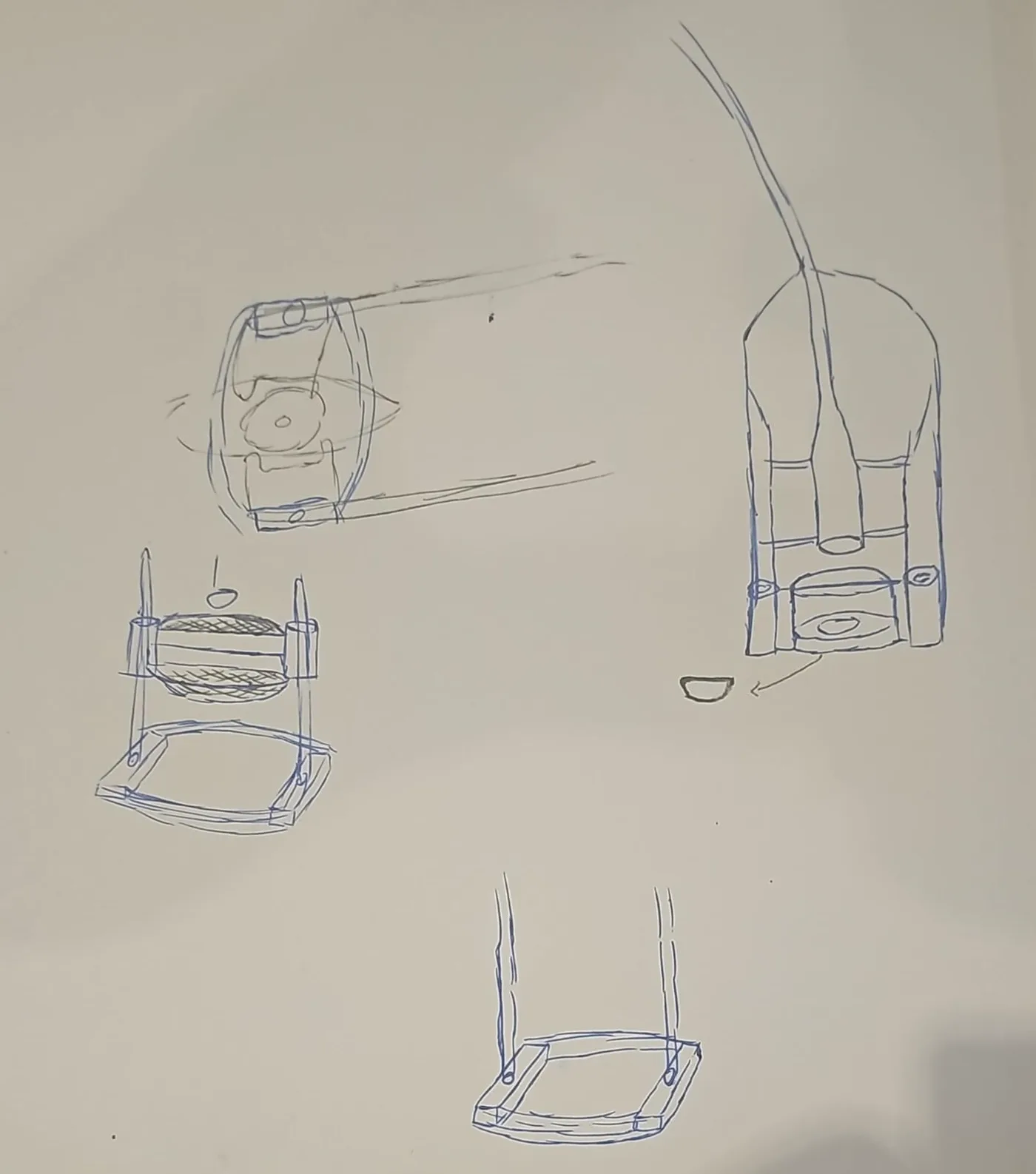
Hand-drawn early concept of a camera-support frame with adjustable supports and an examination base, shown from several angles.
Early concept sketchHand-drawn early concept of a camera-support frame with adjustable supports and an examination base, shown from several angles.

microscopIA-led device–AI programme · research stage

Retinal-imaging and referral-support research for preterm infants

microscopIA is developing an integrated research system for retinal imaging in preterm infants. The device is intended to support a high-resolution camera, primarily a compatible smartphone, to improve inspection and capture of infant retinal images.

Research models analyse de-identified retinal images to study image quality and features of retinopathy of prematurity (ROP). The intended goal is to help identify infants with concerning findings or higher risk for referral to a ROP-trained ophthalmologist, who retains diagnosis and treatment decisions. Future use is being evaluated for appropriately trained neonatologists, neonatal nurses and physicians, including general practitioners where permitted, working under approved institutional protocols and local scope-of-practice rules.

Human-led research pathway

  1. Existing eligibility and follow-up protocol
  2. Image acquisition by a trained professional
  3. Image-quality check and research AI analysis
  4. Qualified clinical review
  5. Established specialist referral and follow-up

Ungradable image or failed acquisition → repeat or escalate under the approved protocol. There is no AI-created ‘no referral’ pathway.

Latest supplied AI development record

Task-specific development benchmarks—not clinical performance.

Source last modified 19 November 2025. Values are shown by model task because the supplied record does not establish performance of an integrated device–AI system.

Stage-related image classification

92.03Accuracy · reported scoreGCViT · 1,099 public-dataset images

Plus-disease classification

93.10Accuracy · reported scoreResNet50 · public development dataset

Vessel segmentation

76.81%Intersection over UnionU-Net · HVDROPDB
Methods, additional scores and limitations
Stage-related classification
Precision 93.39; recall/sensitivity 92.03; F1 92.32. Classes were Normal, Stages 1–3 and laser scars. Stages 4 and 5 were absent, so these results cannot support safe referral prioritisation or deprioritisation.
Plus-disease classification
Precision 88.9; recall/sensitivity 89.8; F1 89.4. Dataset size, patient-level split and confidence intervals were not supplied.
Segmentation
IoU 76.81% using HVDROPDB and U-Net. The supplied record does not document external validation.
Not yet evidenced
The proposed binary ROP route has no supplied benchmark. Zone classification was not trained because the record reports that no suitable public dataset was identified.

The stage and plus values are reproduced as reported; the source does not print a percent sign for them. These are separate public-dataset development tasks with incomplete evaluation details. They are not directly comparable, externally or clinically validated, or evidence of device-level performance. No specificity, AUROC or confidence intervals are claimed.

Public video of the physical automated-microscopy research prototype.

microscopIA-led engineering · benchtop research prototype

Automated microscopy research for malaria

The public video documents a physical microscopy prototype. The programme investigates automated image acquisition and software-assisted flagging of candidate fields, quality issues or samples for review by trained laboratory professionals. It does not confirm or exclude malaria, establish species or parasite density, choose treatment, or replace laboratory quality assurance and clinical judgement.

Any future application to another microscopy-based tropical disease requires its own intended use, dataset, validation plan and regulatory assessment.

Access by design

Research priorities start with settings where specialist people and infrastructure are scarce.

Human authority

Technology may support acquisition and prioritisation; qualified professionals remain responsible for decisions.

Evidence before deployment

Safety engineering, usability, governance, training and independent validation precede clinical use.

Collaboration areas: ROP and pediatric ophthalmology, neonatology, optics and imaging, human factors, device engineering, clinical-AI validation, laboratory microscopy, quality systems and regulation.

Explore responsible funding

Network intelligence

The Network’s full scholarly record.

One canonical registry brings together articles, preprints, chapters, guidelines, conference work, patents, software, and other outputs. Relationship tags distinguish microscopIA affiliation, collaboration, and independent member scholarship.

Checking member profiles and scholarshipSource and relationship verification are shown on each record.
0 verified outputs

Every public output requires a verified member identity, an inspectable source, and human attribution review. Google Scholar supports discovery but is never the sole proof.

Checking member profiles and scholarship

Turn work into evidence

Bring the next clinical question or research-ready dataset.

Strong collaboration begins with a worthwhile question, governed data, and a clear decision audience.